
Rethinking the Traditional Desk
The modern office is rapidly evolving away from static, sedentary setups toward more flexible, active environments. At the heart of this transition is the standing desk, which serves as a cornerstone for combating the health risks associated with prolonged sitting, such as cardiovascular disease and metabolic dysfunction per Harvard Health.
This section outlines the business case for investing in high-quality office furniture that prioritises employee wellbeing. Beyond simply offering a trend, That's My Office provides expert space planning and 3D visualizations to help organisations integrate these solutions effectively.
We will explore how height-adjustable desks drive measurable gains in productivity, morale, and physical health, while offering practical guidance on ergonomic configuration and procurement strategies to ensure a meaningful return on investment.
The Health Case Against Prolonged Sitting
Prolonged sedentary behaviour in the workplace is increasingly recognised as a significant health risk. Extended periods of sitting are linked to a higher incidence of cardiovascular disease, obesity, and type 2 diabetes. When you provide a flexible standing desk, you help employees break these harmful cycles by encouraging movement and natural postural changes throughout the day.
The physiological benefits of reducing sedentary time are well-documented. Research via Harvard Health indicates that standing helps regulate blood sugar levels more efficiently after meals and improves circulation compared to remaining seated. Furthermore, the Cleveland Clinic notes that alternating positions is a primary method for reducing chronic back pain and muscle discomfort. These improvements often translate into tangible business gains, such as a reduction in absenteeism and lower long-term healthcare costs associated with musculoskeletal disorders.
Employee experience data highlights the immediate value of such changes. According to a study published in Applied Ergonomics, 87% of UK workers reported feeling more energised after spending just one hour of their workday standing. The team at That's My Office focuses on ergonomic performance. By prioritising high-quality sit-stand solutions that facilitate these health intervals, organisations help their staff maintain better physical health while boosting daily productivity.
What are the primary benefits of incorporating a standing desk into the modern office?
Incorporating a standing desk into the modern office is an effective way to encourage movement and reduce the health risks associated with prolonged sedentary behaviour. By allowing staff to easily switch between sitting and standing, you can help alleviate physical discomfort, such as back pain, which often leads to improved overall comfort and wellbeing. Beyond physical health, many employees find that these flexible workstations boost focus and energy levels throughout the day. Investing in quality office furniture of this type creates a more dynamic, adaptable workspace that supports a healthy work-life balance. Ultimately, offering teams the ability to control their environment fosters a more productive and engaged workforce.
Beyond Sitting vs Standing: the 20-8-2 rule
The most effective way to improve office wellbeing is to avoid extreme positions, as static standing for long periods can cause as much discomfort as continuous sitting. Research from Cornell University suggests adopting the 20-8-2 rule: for every 30 minutes, you should aim to sit for 20 minutes, stand for 8 minutes, and move or stretch for 2 minutes.
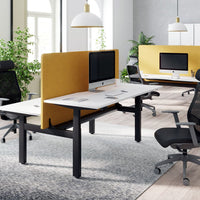
Height adjustable desks from That's My Office make this rhythmic movement achievable. By allowing users to switch positions seamlessly, these workstations ensure that neither sitting nor standing becomes a static, taxing requirement. Unlike traditional fixed-height options, modular office furniture allows employees to maintain blood flow and prevent muscle strain throughout the working day.
Building this level of activity requires patience. Experts recommend starting with 15 to 30 minute standing intervals and gradually scaling up to reach two to four hours of total standing time over an eight-hour shift. If you are uncertain how to integrate this equipment into your specific floor plan, That's My Office offers professional space planning and 3D visualization tools to help ensure your new setup promotes movement without disrupting operational efficiency.
Calorie Burn, Circulation, and Core Engagement
While interest often focuses on the metabolic impact of a standing desk, the actual calorie difference between sitting and standing is modest. Harvard Medical School notes that standing burns roughly 88 calories per hour compared to 80 while seated. For those seeking a higher physical output, specialized desk treadmills can elevate this usage to approximately 210 calories per hour.
Beyond simple energy expenditure, the primary health merits of office furniture that supports standing relate to circulatory health and core activation. Standing fosters better oxygen delivery and engages the core muscles, which contributes to a more active, alert physical state. This change in mechanics is highly effective at reducing the fatigue often associated with static, sedentary desk work.
Performance data underscores these physical benefits. Such gains are largely indirect, stemming from increased alertness, lowered physical discomfort, and a meaningful reduction in the need for non-productive micro-breaks throughout the work day.
Reducing Musculoskeletal Pain and Absenteeism
Musculoskeletal disorders represent a significant challenge for organisations in the UK, contributing to high levels of absenteeism. A report by Digby Brown Solicitors recently linked a substantial portion of the 600,000 annual workplace injuries in the country to the use of outdated or unsafe office furniture. By proactively addressing these issues, businesses can create a healthier, more resilient workforce.
Research highlights the effectiveness of height adjustable desks in mitigating these risks. A study involving 146 NHS staff published in the British Medical Journal found that these workstations improved mental wellbeing and engagement while reducing fatigue and anxiety over a one-year period. Furthermore, 47% of participants reported a significant reduction in discomfort within their upper back, shoulder, and neck areas. When selecting office furniture, these ergonomic health benefits should be a primary consideration.
Correct Ergonomic Setup
To prevent common issues like neck strain and hunching, the physical setup must be precise. Monitors should be placed at eye level, about 20 inches from the face, to maintain a neutral spinal position. Additionally, ensuring that elbows are kept at a 90-degree angle while typing reduces tension in the shoulders. For those moving between positions, using anti-fatigue mats and wearing supportive footwear are practical, affordable add-ons that alleviate joint pressure and increase comfort during standing intervals.
How can high-quality office furniture improve overall workplace productivity?
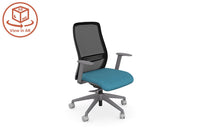
High-quality office furniture functions as a strategic tool for enhancing workplace productivity by aligning your workspace with the natural movements of the human body. Integrating an ergonomic standing desk or supportive seating allows team members to tailor their environment to their specific needs, significantly reducing fatigue and the risk of musculoskeletal strain. When employees are physically comfortable, they can maintain focus for longer periods without the distraction of physical discomfort, directly boosting overall output. Beyond core tasks, modern, well-planned office furniture helps create an organised workspace that fosters engagement and long-term morale. Ultimately, investing in premium office solutions is a proactive way to support employee wellbeing, leading to fewer absences and a more efficient, high-performing team.
Mental Focus and the Cognitive Edge
Integrating a standing desk into modern office furniture plans does more than support physical health. Using these workstations to alternate between positions acts as a mental reset, providing a shift that is particularly beneficial for employees with ADHD, according to the Cleveland Clinic.
Research highlights the emotional and cognitive advantages of such movement. Studies indicate that frequently alternating between sitting and standing can reduce anxiety and stress while improving overall mood. A 2021 study in the International Journal of Environmental Research and Public Health further confirms this link, demonstrating that sit-stand desks contribute directly to higher work performance and improved energy levels throughout the day.
True cognitive optimization often comes from task-specific flexibility. Many professionals find that standing encourages dynamic engagement for brainstorming or collaborative communication, while sitting offers the stability often preferred for concentrated, fine-motor tasks like detailed writing or technical data entry. By providing teams with the agility to choose their posture based on the requirements of the moment, businesses enable a more responsive and focused work environment.
Designing a Layout That Works
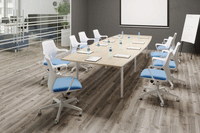
A thoughtful office layout balances collaboration and concentration, and incorporating a standing desk enables flexible zoning within these spaces. By leveraging height adjustable desks as a central feature, facilities managers can create workstations that adapt to individual needs rather than forcing a static regime. That's My Office supports this process by providing expert space planning, CAD layouts, and 3D visualizations, ensuring each piece of office furniture serves a specific purpose in your broader workplace strategy.
What factors should facilities managers prioritise when planning a new office layout?
Managers should prioritise a balance between collaborative zones and quiet areas to support diverse work styles. Integrating versatile equipment allows for greater flexibility and promotes long-term employee wellbeing by accommodating individual ergonomic needs. By analysing space utilisation and current hybrid working patterns, you can ensure your floor plan remains adaptable for future growth. Implementing clear circulation routes and using acoustic solutions to minimise noise helps create an environment that actively encourages focus.
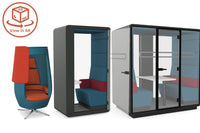
Why should businesses consider acoustic pods or phone booths when designing an open-plan office?
While open-plan layouts foster collaboration, background noise can hinder individual productivity. Acoustic pods or phone booths provide a dedicated sanctuary for confidential calls and deep work without needing permanent structural changes. When paired with high-quality ergonomic seating and sit-stand workstations, these units help you maintain a team-oriented culture while ensuring employees have the quiet zones needed to excel.
Making the Business Case to Management
Positioning a standing desk as a strategic investment rather than a workplace luxury allows facilities managers to align office upgrades with broader corporate goals. When businesses select ergonomic office furniture, they mitigate the hidden costs of presenteeism, where employees remain physically present but underperform due to physical strain.
Musculoskeletal disorders represent a major economic drain, with workplace health research showing that back and neck pain drive significant absenteeism across Europe. Providing height-adjustable workstations helps counteract this, as many users report a reduction in upper back, shoulder, and neck discomfort. While budget-oriented, non-ergonomic desks may appear cheaper initially, the total cost of ownership is often higher when factoring in long-term productivity losses and health-related expenses.
A phased implementation remains the most effective way to validate these benefits. By rolling out a pilot programme in one department, leaders can gather direct feedback and quantify performance improvements before scaling the investment further. This manageable approach helps secure buy-in across the organisation while demonstrating a tangible commitment to employee wellbeing and retention.
How Tech Tools Simplify Furniture Procurement
Selecting the right standing desk or broader office furniture ranges often involves significant guesswork regarding fit, style, and utility. That's My Office integrates advanced digital tools to turn this abstract process into a precise, visual experience. By utilising 3D models, 360-degree product views, and Augmented Reality (AR) visualisations, decision-makers can place furniture into their actual environment to confirm it aligns with existing layouts before a single item is ordered.
These digital assets provide a high degree of confidence when upgrading workspace functionality. While traditional suppliers may rely on static catalogues, That's My Office creates bespoke CAD layouts and professional space plans to help ensure each piece integrates well. This tech-forward approach removes common procurement friction, leading to faster decision-making, reduced planning errors, and more streamlined delivery schedules for businesses across the UK.
How can technology tools like 3D modelling and Augmented Reality assist in office procurement?
Technology tools like 3D modelling and Augmented Reality (AR) revolutionise office procurement by bridging the gap between digital planning and physical reality. These tools allow you to visualise exactly how specific office furniture, such as a new standing desk or modular seating, will fit and function within your unique workspace. By overlaying digital models onto your actual office floor plan, you can assess layout, ergonomics, and aesthetics in real-time before committing to a purchase. This interactive approach significantly reduces the uncertainty often associated with buying online, ensuring that every item perfectly complements your team's needs and current office flow. Ultimately, integrating these 3D visualization technologies streamlines the procurement process, helping you make informed, confident investments in your workspace.
Getting the Setup Right: Ergonomics Essentials
Achieving the full benefits of a standing desk depends on precision in workstation configuration. To maintain proper postural alignment, position your monitor at or slightly below eye level at a 20-degree tilt, ensuring your arms remain at a 90 to 100-degree angle while typing. Feet should rest flat on the floor or a supportive footrest.
Minimising joint stress requires paying close attention to your body as you change positions. Keep knees loose and slightly bent while standing rather than locking them, and consider using anti-fatigue mats paired with supportive footwear to alleviate pressure on the lower limbs. These additions from That's My Office can help make shifting between postures feel like a more natural part of your workflow.
The most effective workspace integration uses a hybrid approach rather than sticking to one position. Reserve seated time for tasks requiring high levels of precision or fine-motor skill, while moving to a standing posture for broader projects or collaborative work. Shifting position every 30 minutes can help reduce static strain. When desk height and posture are calibrated correctly, a properly adjusted setup can support productivity and comfort compared with prolonged sitting.
A Worthwhile Investment for Modern Workplaces
Integrating a standing desk into your office furniture strategy fosters a healthier, more energised workforce. As Applied Ergonomics reports, 87% of employees feel more energised when incorporating standing, while 66% see productivity gains.
These desks are not a singular cure but function best within a comprehensive ergonomic framework. When choosing suppliers, look for partners like That's My Office that provide 3D visualizations and professional installation to ensure your investment is executed correctly.
Prioritising adaptable solutions future-proofs your space for hybrid work, demonstrating a commitment to long-term employee wellbeing. By combining movement with smart procurement, you build an environment that supports both performance and physical health.



0 comments