
Why Open-Office Standing Desks Need Careful Planning
The adoption of a standing desk has become a popular strategy for UK businesses looking to promote wellness and agility. While these workstations offer clear physical benefits, placing them within open-plan offices requires thoughtful planning to balance personal health goals with shared environmental needs.
Open-office layouts introduce specific challenges, such as potential visual distractions and the need for acoustic control. At That's My Office, we assist facilities managers by using CAD layouts to ensure each installation maintains sightlines and team harmony. Successfully integrating a standing desk relies on addressing ergonomics, social etiquette, and spatial efficiency from the start.
Health Advantages of a Sit-Stand Workstation
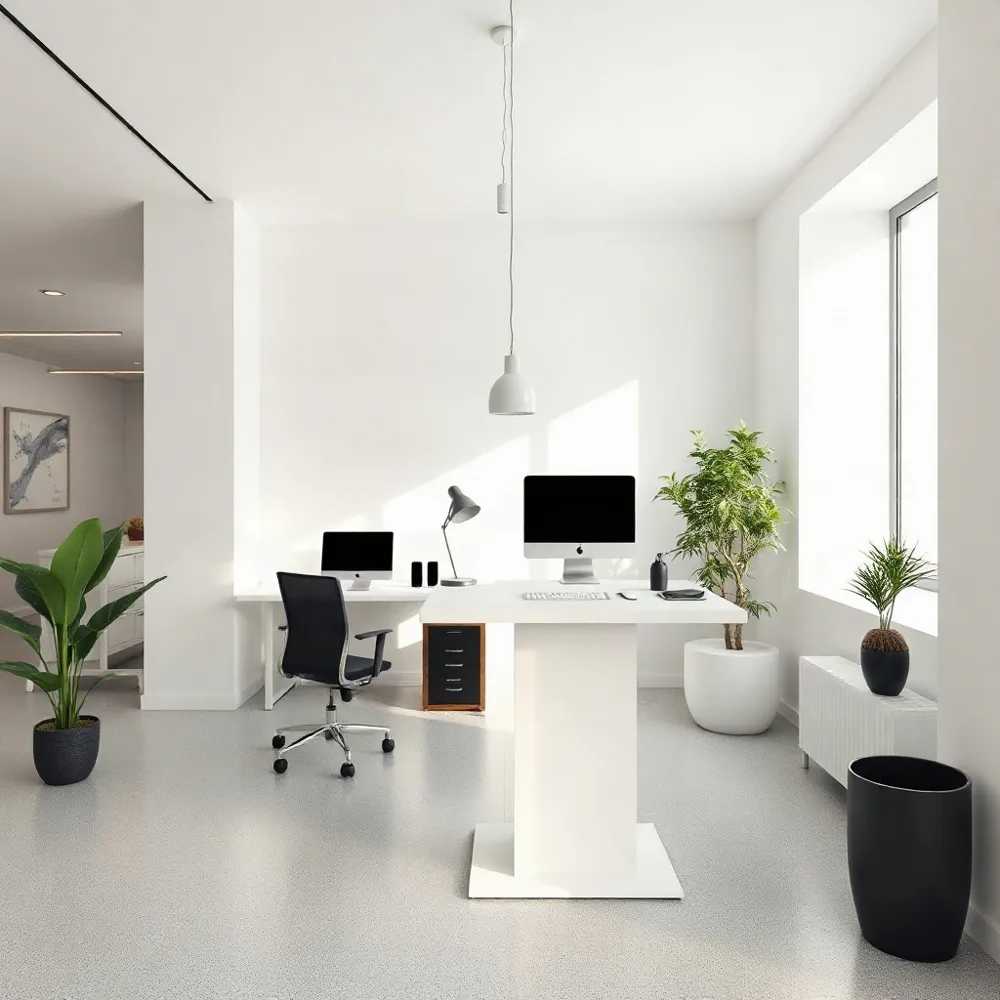
Incorporating a standing desk into the modern office provides a practical solution to the health risks of prolonged sedentary work. By encouraging movement and postural variety, these workstations help reduce physical discomfort, specifically targeting common issues like neck and shoulder pain. Beyond physical health, research suggests that sit-stand interventions can boost employee energy levels, mood, and cognitive performance. Providing staff with the flexibility to switch positions ensures they remain comfortable and engaged throughout the day. Ultimately, a standing desk supports a more dynamic work environment that prioritises long-term wellbeing and boosts overall productivity.
Extended periods of sitting are associated with higher risks of obesity, diabetes, and heart disease. To mitigate these risks, That's My Office offers height adjustable desks that facilitate active work habits. A study by Texas A&M University demonstrated that call center employees using such desks experienced a 50% increase in productivity. Similarly, a UK-based study reported that 66% of workers using a standing desk observed higher productivity, while 87% felt more energised after incorporating just one hour of daily standing source.
The energy expenditure difference between positions is significant. Standing can burn approximately 100 to 200 calories per hour, compared to 60 to 130 calories while seated. Beyond caloric burn, frequent postural changes help reduce blood sugar spikes following meals and improve circulation throughout the body. Facilities managers looking to integrate these benefits can use the space planning services at That's My Office to ensure ergonomic compatibility and efficient layout design.
Sitting vs Standing – Use Both for Best Results
The health benefits of a standing desk do not stem from remaining upright for the entire workday, but from the ability to introduce movement into a static environment. While prolonged sitting is linked to chronic musculoskeletal discomfort, standing for excessive periods carries its own risks, including circulatory strain, knee pain, and persistent foot fatigue. Achieving true workplace wellness requires a balanced rhythm rather than choosing one posture exclusively.
To maintain optimal health, experts suggest that the human body performs best when shifting through a mix of static and dynamic activity. Research from Cornell University’s Ergonomics Web recommends an effective rotation of 20 minutes of sitting, 8 minutes of standing, and 2 minutes of active stretching. This measured approach prevents the body from locking into a single position, which is the primary driver of physical strain.
Are standing desks more effective than standard ergonomic office chairs for improving back health? Rather than viewing them as competitors, it is most effective to see a standing desk and an ergonomic office chair as complementary elements of a healthy, dynamic workspace. While a high-quality chair provides essential lumbar support during seated tasks, a height-adjustable desk encourages the movement necessary to prevent stiffness. Relying on just one can be counterproductive, as extended standing can also lead to fatigue and lower extremity discomfort. The most sustainable approach for back health is to alternate between sitting and standing throughout the day, using both solutions to facilitate regular posture changes. By combining these tools, you create a versatile environment that supports long-term physical wellbeing and productivity.
Ergonomic Setup Essentials for Stand-Up Desks
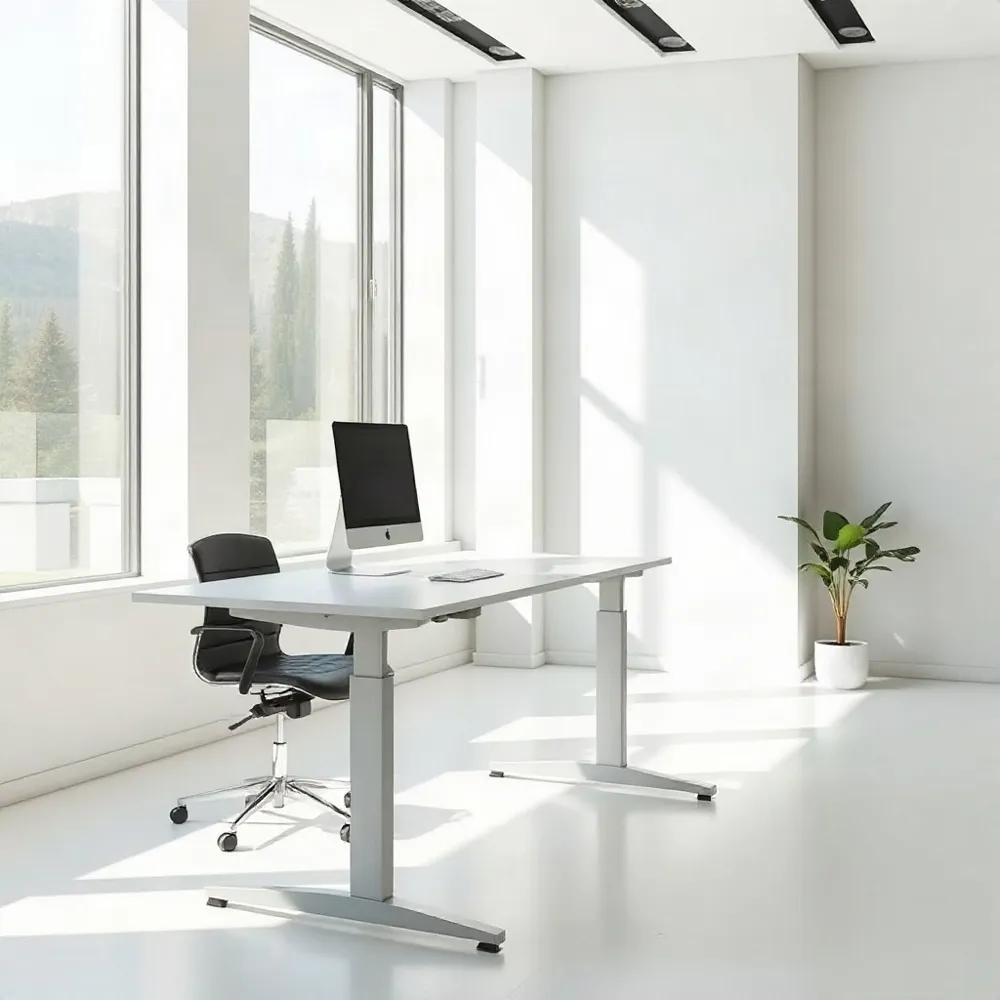
Achieving the full health benefits of a standing desk requires more than just changing altitude. To prevent strain and ensure comfort, your workstation setup must follow strict ergonomic principles. The foundational rule is to position your desk height so your forearms are parallel to the floor, maintaining a 90-degree angle at the elbows. This neutral posture prevents repetitive strain injuries and keeps your shoulders relaxed.
Correct monitor placement is equally vital for long-term health. UCLA Health advises positioning screens at or slightly below eye level, roughly 20 inches from your face with a slight 20-degree tilt to minimise neck fatigue. To avoid leg strain, you must avoid locking your knees while standing. Using a high-quality anti-fatigue mat is essential, as it provides the necessary cushion to encourage subtle muscle engagement while protecting your joints.
For precise spacing, many ergonomic experts recommend the two-finger rule. By maintaining a gap equal to two fingers between the desk edge and your forearms, you prevent ulnar nerve compression. While competitors often offer basic home models, That's My Office provides commercial-grade solutions designed for intensive use. Our height adjustable desks feature high-stability frames capable of supporting over 100kg, ensuring a wobble-free experience that keeps your monitor steady and your focus sharp throughout the day.
- Check that the height adjustment range spans 60 cm to 125 cm to accommodate diverse staff statures.
- Prioritise dual-motor systems for quieter, smoother transitions that do not distract colleagues.
- Ensure the desk frame meets industry standards for stability to reduce visual flickering on neighboring screens.
- Utilise That's My Office services, including 3D space planning, to verify your layout before final installation.
Fitting Sit-Stand Desks Into Open-Plan Layouts
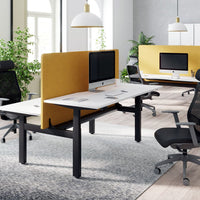
Integrating a standing desk into an open-plan office requires more than just functional furniture. It demands a strategic approach to spatial design to prevent the looming effect, where a standing individual disrupts the sightlines or privacy of seated colleagues. That's My Office supports this process through CAD layouts and 3D visualisations, allowing teams to verify clearances before installation.
Noise and visual stability are key factors for maintaining a professional atmosphere. Lower-quality single-motor units often exceed 50 dBA during operation, creating auditory distractions. In contrast, dual-motor systems offer significantly quieter, smoother transitions. Stability is equally important, as monitor wobble can be a source of constant irritation. High-quality desks meeting BIFMA G1-2013 standards typically keep vertical displacement below 1mm at standing height, preserving focus for neighboring staff.
Safety and cable management are often overlooked during the initial setup phase. Every desk needs sufficient cable slack to accommodate the full range of motion without straining connections or creating trip hazards. That's My Office provides expert guidance on cable management and ergonomic compatibility to ensure these systems integrate seamlessly into existing office layouts.
How can facilities managers determine if a height adjustable desk is the right investment for their team?
To determine if a standing desk is the right investment, facilities managers should first evaluate the specific health and flexibility requirements of their workforce. Start by gathering direct feedback from staff to identify common ergonomic challenges or comfort issues that could be resolved by shifting between sitting and standing. Consider your office layout and culture, as these solutions are particularly effective in agile environments where desk sharing and versatile workstations are prioritised. You should also assess the potential for long-term productivity gains and employee retention, as modern, health-conscious office designs are increasingly influential in attracting top talent. Ultimately, a successful transition involves balancing these human-centric benefits with your available space and the long-term durability of the equipment.
Team Etiquette – Minimising Disruption in Shared Workplaces
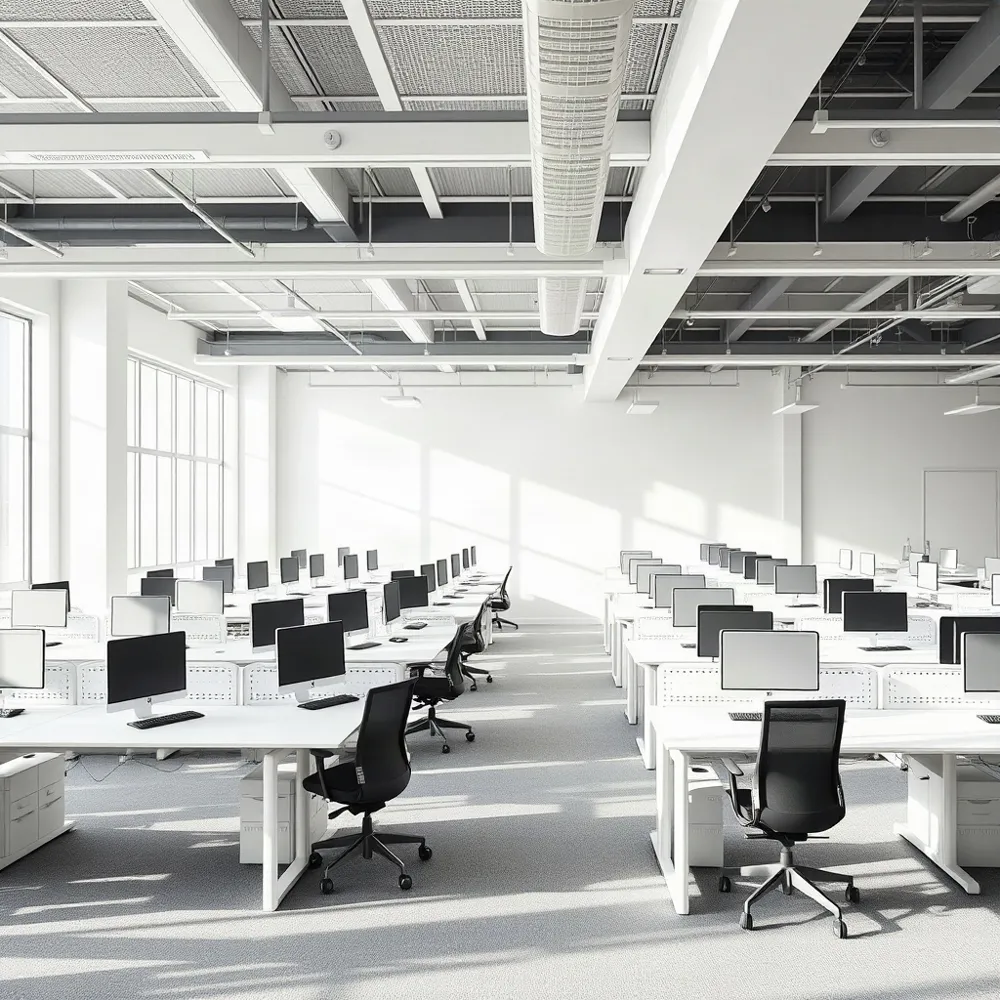
Introducing a standing desk into an open-plan environment requires more than just hardware. When teams move from static seating to dynamic movement, the visual and acoustic shifts can disrupt colleagues. Facilities managers can mitigate this by adopting Standing Blocks, where teams synchronize their transitions to designated times of the day to reduce erratic movement. While competitors often offer basic single-motor models that may generate distracting noise levels, That's My Office provides high-quality, whisper-quiet electric solutions designed for shared professional spaces.
Managing sightlines is equally important to maintain a professional atmosphere. A standing user should be mindful of their position to avoid obstructing overhead light or casting shadows onto the screens of seated coworkers. We recommend utilizing 3D visualisations to map out these sightlines during the planning phase, ensuring that height changes do not create unintended barriers between collaborative team members.
Safety and privacy remain foundational concerns in dense office layouts. Modern workstations should feature integrated anti-collision technology, which automatically stops the motor if the desk detects resistance from a chair or neighboring furniture. To protect sensitive data from unauthorized viewing, teams should engage in open communication regarding screen angles and positioning. That's My Office ensures that these ergonomic considerations are embedded into your office design, offering robust support that respects individual privacy while promoting collective wellness.
Choosing a Professional-Grade Height-Adjustable Desk
What should procurement teams look for when selecting a professional-grade standing desk? When selecting a standing desk, procurement teams should prioritise the adjustment range to ensure the equipment comfortably accommodates users of all statures. For a diverse workforce, favour desks with a three-stage lifting system, which often provides a lower minimum starting height of 60cm and extends up to 125cm to support users from 5'2'' to 6'4'' tall.
Stability is paramount in high-traffic areas, so verify that the frame offers a weight capacity of at least 100kg. This ensures the height adjustable desk remains steady and secure under heavy loads. Efficiency also matters in a busy workplace, so look for a reliable dual-motor system that delivers a swift, quiet operating speed of 36mm to 40mm per second.
Unlike budget home-office models that may lack the durability for constant commercial use, our professional-grade solutions are built for long-term reliability. To ensure your chosen furniture fits your specific floor plan, you can explore our range of desks and use our 3D models to visualize exactly how they will integrate into your office design.
Gradual Adoption – Helping Staff Adapt to Standing
Adopting a standing desk requires a phased approach to prevent physical fatigue and ensure long-term comfort. Facilities managers should encourage staff to start with modest intervals, such as 20 minutes of standing for every hour of work, eventually building up to a maximum of four hours throughout the day. Using digital timers or dedicated productivity apps can help employees maintain these intervals consistently, ensuring they switch postures before discomfort sets in.
One common pitfall is the belief that initial aches are simply a part of adjusting to a new workstation. Experts emphasize that discomfort typically signals a poor setup rather than an inevitable phase of transition. A standing desk should always be positioned to maintain a 90-degree elbow angle, with the monitor placed at eye level to prevent neck strain. If an employee experiences pain, it is essential to review their equipment height and support settings immediately.
True workplace wellness relies on staying active, not just standing still. Employees should be encouraged to integrate gentle movement, such as calf raises or light stretching, into their standing time to promote blood flow. That's My Office provides comprehensive support for this transition, offering expert guidance on ergonomic layouts that ensure staff remain comfortable and productive. By pairing high-quality, stable furniture with deliberate movement habits, teams can effectively mitigate the risks of a sedentary lifestyle while fostering a more dynamic and energized office culture.
UK Compliance – DSE Regulations and the WELL Standard
Employers must address the health risks of static work environments under UK Display Screen Equipment (DSE) regulations. These rules mandate that organisations assess workstation ergonomics to minimise injury, which often justifies the provision of a standing desk when standard furniture fails to support user requirements.
For facilities managers, the WELL building standard offers a benchmark for high-performance offices by recommending that at least 25% of all workstations provide the option to alternate between sitting and standing. Implementing this shift does not require an immediate total overhaul. Instead, piloting a limited number of units or utilising desktop converters allows teams to evaluate the impact on daily workflows before committing to a larger investment.
When an employee presents specific health needs, a formal occupational health assessment may lead to the requirement for an employer to fund or part-fund a height adjustable desk. To determine if this is the right investment, facilities managers should first evaluate the specific health and flexibility requirements of their workforce. Start by gathering direct feedback from staff to identify common ergonomic challenges or comfort issues that could be resolved by shifting between sitting and standing. Consider your office layout and culture; these solutions are particularly effective in agile environments where desk sharing and versatile workstations are prioritised. You should also assess the potential for long-term productivity gains and employee retention, as modern, health-conscious office designs are increasingly influential in attracting top talent. Ultimately, a successful transition involves balancing these human-centric benefits with your available space and the long-term durability of the equipment.
Lifespan and Sustainability of Sit-Stand Furniture
Selecting a durable standing desk is a strategic investment for UK businesses aiming to reduce waste and improve long-term workplace value. A high-quality commercial-grade electric standing desk typically offers a lifespan of 8 to 15 years, provided the components are designed for heavy use. Unlike budget models, these professional units feature robust frames and higher weight capacities that withstand years of daily height adjustments.
Operating efficiency is an often overlooked aspect of a sustainable office. Because the electric motors in modern professional desks only consume power during brief moments of height adjustment, the total annual energy cost is minimal. To ensure your investment remains viable over its long lifecycle, procurement teams should look for models that prioritise build quality and reliable serviceability.
That's My Office supports sustainable workplace transitions by providing comprehensive furniture reuse and recycling programmes. When you choose to upgrade your office, these services help divert decommissioned furniture from landfills, supporting broader corporate environmental goals. Beyond initial supply, the team helps businesses manage their furniture lifecycle through expert space planning and ongoing support.
What should procurement teams look for when selecting a professional-grade standing desk?
When selecting a professional-grade standing desk, procurement teams should prioritise the adjustment range to ensure the desk comfortably accommodates users of all statures, typically favouring three-stage lifting systems. Stability is paramount, so check that the frame offers a robust weight capacity—ideally 100kg for commercial environments—to support heavy equipment without wobbling. Efficiency matters in a busy workplace, so look for a reliable motor with a swift, quiet operating speed. Consider the footprint and customisation options to ensure the furniture fits your specific floor plan and operational needs effectively. For expert support in selecting the right solution for your office, you can explore our range and view detailed 3D models.
Making Sit-Stand Work for Your Open Office
The successful implementation of a standing desk hinges on more than just the hardware itself. While these solutions offer proven gains in energy, productivity, and spinal health, facilities managers must balance this equipment with ergonomic accessories like anti-fatigue mats and proper monitor arms to ensure sustained comfort.
Planning is vital to avoid common pitfalls such as visual disruption or poor cable management in shared layouts. That's My Office assists organisations in navigating these transitions by providing detailed CAD layouts and 3D visualisations. By combining expert space planning with professional installation, you can create a dynamic, health-conscious environment tailored to your specific team requirements.



0 comments