
The Hidden Cost of Open-Plan Noise
Open-plan offices rely on hard, reflective surfaces such as concrete walls, glass partitions, and hardwood floors. These materials cause sound to bounce rather than be absorbed, creating a persistent background hum that makes focused work difficult.
Research shows that excessive noise in these environments can cost each worker up to 86 minutes of lost productivity per day. Employees in open-plan spaces frequently cite nearby conversations as their biggest distraction, and recovering focus after an interruption takes an average of 20 minutes.
The result is measurable: lower morale, increased stress, and reduced job satisfaction. Addressing this challenge starts with understanding how acoustic office panels absorb reflected sound and restore a workable level of quiet. That is where the next section begins.
How Acoustic Office Panels Work to Restore Focus
Open-plan offices suffer when hard, reflective surfaces like concrete, glass, and hardwood cause sound to bounce uncontrollably. This phenomenon creates excessive reverberation, which significantly hampers cognitive tasks and increases employee fatigue. To manage these acoustic challenges, facilities managers often distinguish between sound reflection, which panels absorb, and sound transmission, which requires physical barriers like pods for isolation.
What are the primary benefits of installing acoustic office panels in a workplace?
Installing acoustic office panels is a highly effective way to manage sound levels, reduce disruptive reverberation, and improve speech privacy in modern open-plan environments. By effectively absorbing unwanted sound waves, these panels create a more focused atmosphere, which directly contributes to higher employee productivity and reduced stress levels. Beyond auditory comfort, these panels serve as versatile design elements that can elevate the visual appeal of your workspace while supporting team collaboration. We also offer full-service installation and competitive bulk pricing to ensure your project remains seamless and cost-effective from start to finish.
- Absorption: Porous materials convert sound energy into heat to minimize echo.
- Blocking: Physical partitions disrupt the path of sound to prevent travel.
- Covering: Sound masking raises ambient noise to make speech unintelligible.
Strategic Placement: Targeting the First Point of Reflection
Effective noise management in an open-plan environment does not require you to cover every square inch of your office with high-performance materials. Instead, you can maximize the impact of your acoustic office panels by focusing on the first point of reflection, which is the specific location where sound waves traveling directly from a source collide with a hard, reflective surface like glass, concrete, or a metal ceiling.
Identifying these hotspots allows you to intercept sound energy before it can bounce back and create a lingering echo. By placing panels at these critical reflection zones, you can significantly diminish the reverberation that leads to high distraction levels and employee fatigue. Professionals can use tools on thatsmyoffice.myshopify.com to virtually test different panel configurations, ensuring that your layout targets these problem areas without disrupting your existing architectural aesthetic.
While every floor plate has its own unique geometry, a reliable starting point for most commercial settings is to aim for 15% to 20% surface coverage across walls or ceilings. This targeted approach is frequently more efficient than blanket solutions often proposed by generic suppliers. By working with our team, you ensure that these panels are not only correctly positioned for acoustic performance but are also integrated into your workspace with minimal downtime for your staff.
Visualising Before You Buy: The AR Advantage
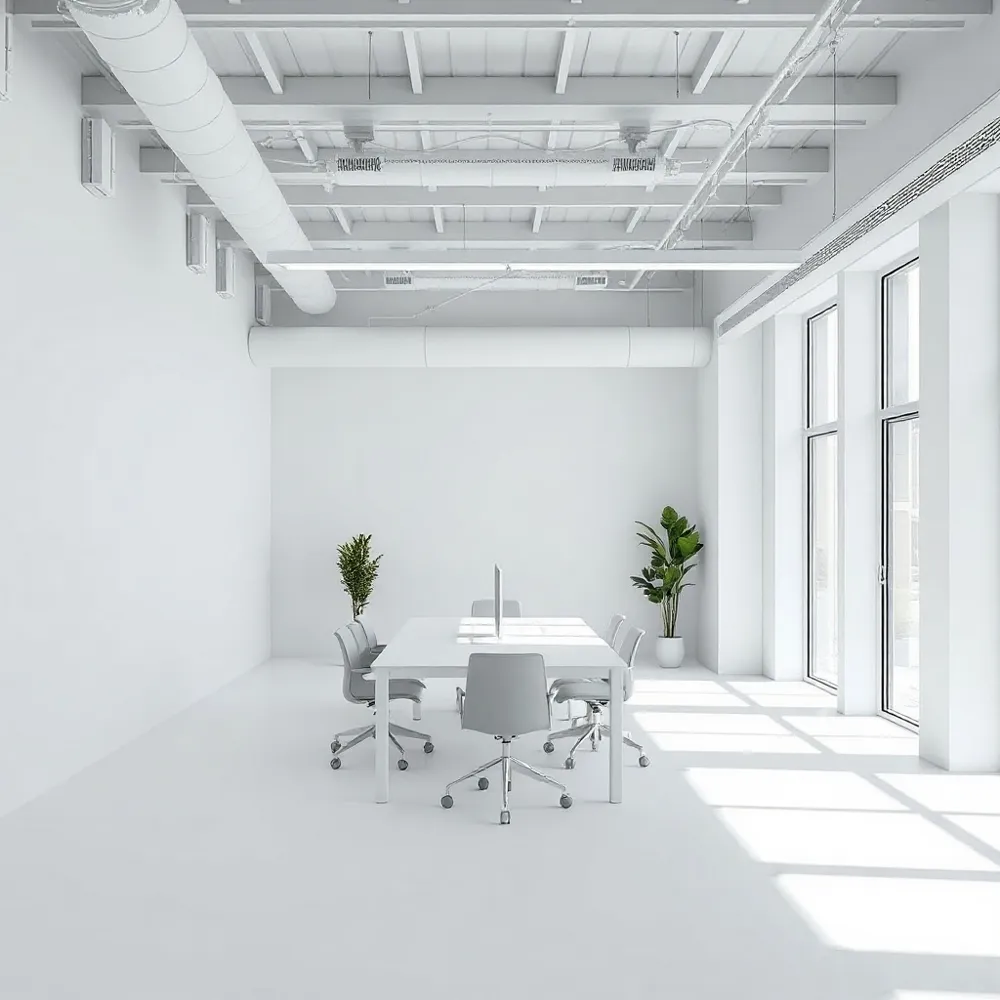
Choosing the right acoustic office panels for your open-plan space can feel uncertain when you are selecting from photos or sample swatches alone. That is why Thats My Office offers a built-in augmented reality (AR) tool on its website, letting you project a realistic 3D model of any panel directly into your actual room before you place an order.
You can see how the texture, colour, and size of each acoustic panel fit against your existing walls, glass partitions, or ceiling layout — all in real time, from your phone or tablet. This visual preview removes the guesswork and gives procurement managers the confidence that the final installation will match both the design brief and the budget.
After you have settled on your configuration through the AR tool, Thats My Office handles full delivery and professional installation, so what you saw on screen is exactly what you get in your workspace. Combined with competitive bulk pricing on all acoustic solutions, this approach turns a potentially risky purchase into a fast, data-backed decision.
Beyond Panels: Soundproof Booths and Pods for Total Focus
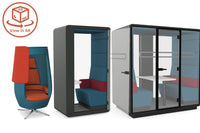
While acoustic panels effectively control echo and reduce reverberation across an open floor, they cannot fully isolate a single conversation. For tasks that demand total privacy, such as confidential client calls or deep-focus project work, many offices turn to soundproof booths and pods.
What to look for in a soundproof booth
The most critical specification for any soundproof booth is its decibel (dB) reduction rating. A commonly cited benchmark is 28 dB of sound reduction; at this level, speech is typically contained within the pod and less likely to carry across the workspace. A booth with lower attenuation may still allow nearby colleagues to overhear conversations, which can limit its usefulness.
A 28 dB reduction benchmark is widely cited across the industry. Integrated silent ventilation is another essential feature — without it, users quickly become uncomfortable during extended sessions, leading them to abandon the pod entirely.
Soundproof booths complement acoustic panels by addressing a different acoustic problem: blocking direct airborne sound rather than absorbing reflections. In a typical open-plan layout, panels handle ambient noise while pods provide secure enclosures for high-stakes conversations. Both types of solutions are available from suppliers that offer design and installation services, allowing procurement teams to build a layered acoustics strategy from a single source.
Combining Soft Furnishings and Plants for Acoustic Relief
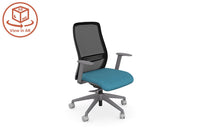
Beyond installing acoustic office panels, you can significantly reduce ambient reverberation by incorporating soft furnishings that act as passive sound absorbers. Large, hard surfaces like glass, concrete, and hardwood act as mirrors for sound, causing waves to bounce uncontrollably through your workspace. High-pile rugs, fabric-covered chairs, and cushioned sofas help break up these reflective surfaces, effectively trapping sound energy before it can accumulate into a distracting murmur.
For facilities managers seeking a cohesive approach, these soft elements complement the performance of your acoustic office panels. When planning your layout, consider that furniture choice is as much about acoustics as it is about aesthetic comfort. At Thats My Office, we offer options to make large-scale projects cost-effective. Our design services help you identify the right balance of texture and density, ensuring your selections work in tandem with modular solutions like our acoustic pods.
Biophilic design also offers a functional benefit alongside its documented impact on employee well-being. Strategically placed plants serve as natural diffusers, as their leaves, stems, and even the surrounding soil help absorb, deflect, and scatter sound waves. While individual plants provide only minor relief, large clusters or dedicated green walls can meaningfully improve the sound profile of a communal area.
- Incorporate high-pile rugs in collaborative hubs to reduce floor-level reflections.
- Utilize fabric-upholstered seating in quiet zones to increase total sound absorption surface area.
- Cluster large indoor plants near high-traffic areas to naturally diffuse sound paths.
- Pair these passive treatments with targeted acoustic office panels to reach the recommended 15% to 20% coverage threshold for optimal noise control.
Design, Deliver, Install: The Full-Service Procurement Model
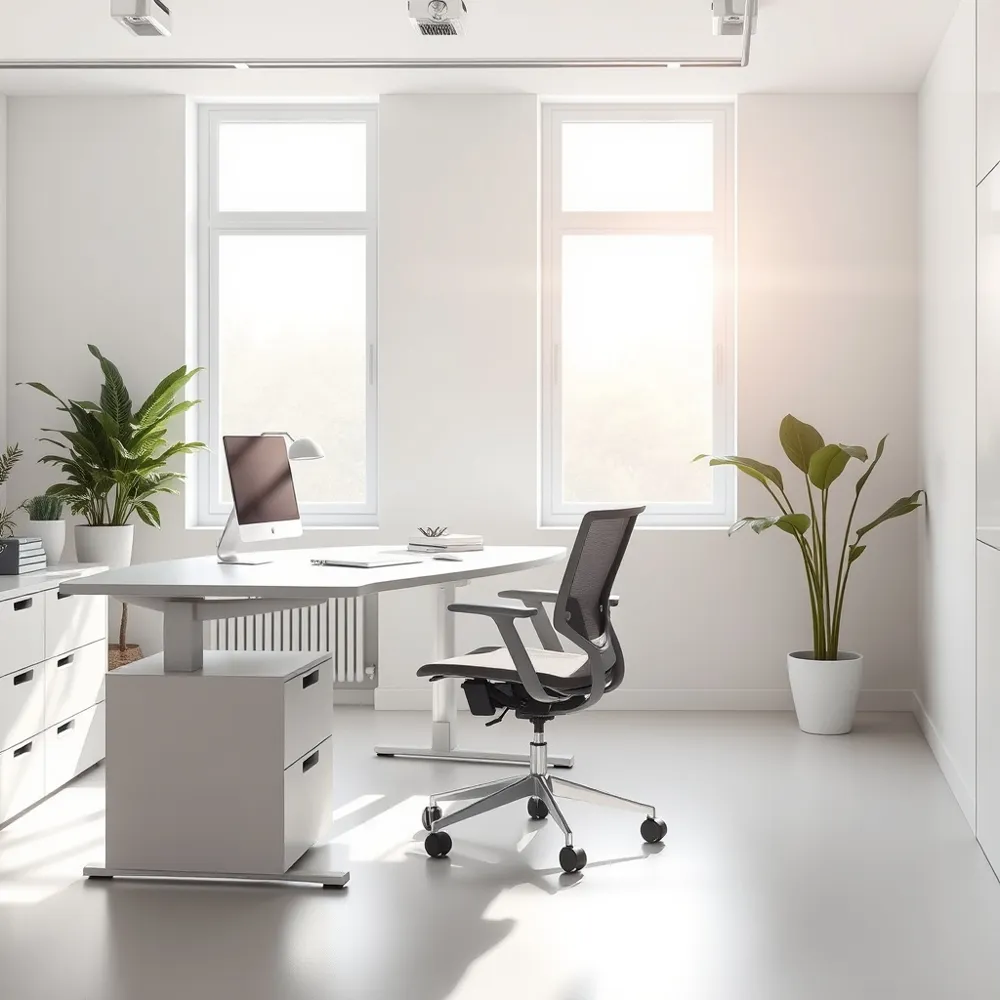
Coordinating the purchase, delivery, and installation of acoustic office panels often pulls facility managers away from their core responsibilities. That is why a single-source "design | deliver | install" model can be a more efficient alternative to managing multiple third-party contractors.
What does the full-service approach involve when purchasing acoustic office panels?
A provider offering an end-to-end experience removes the burden of managing complex logistics. The process begins with a consultation to configure the right panels for your specific layout, often using advanced AR visualisation tools to confirm placement and fit before any order is placed.
Once the specification is finalised, the professional team handles all delivery scheduling and on-site management. The final stage involves expert assembly and installation, ensuring each panel is correctly positioned to meet both acoustic and aesthetic goals. This full-service lifecycle eliminates the risk of incorrect assembly or workspace disruption that can occur when using separate suppliers.
By entrusting the entire procurement process to a single partner, procurement managers and facilities directors can keep their focus on daily operations rather than logistical coordination.
Bulk Pricing: Scaling Your Acoustic Investment Efficiently
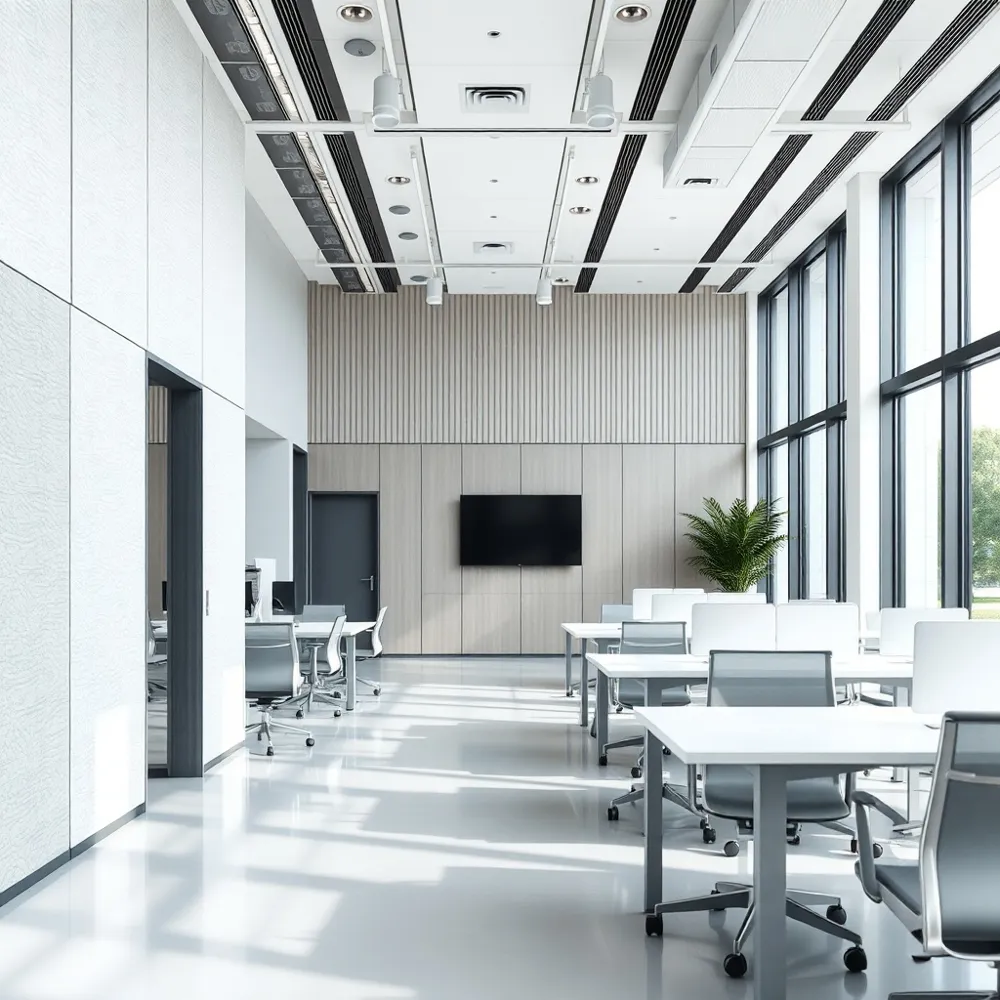
Are there cost benefits associated with ordering acoustic office panels in large quantities? Yes, investing in acoustic office panels via a bulk procurement strategy offers significant financial advantages through our competitive pricing structure. By consolidating your facility requirements into a single project, you benefit from economies of scale that lower the cost per unit compared to fragmented, smaller orders.
Beyond immediate price savings, bulk procurement streamlines your supply chain and minimizes administrative overhead. This approach allows for more predictable budget management, as you can align your acoustic investment with broader facility improvement cycles. Our full-service design, deliver, and install model ensures that large-scale fit-outs are managed with reliability, eliminating the risk of costly installation delays often linked to piecemeal projects.
Planning such extensive layouts does not require guesswork. You can use our integrated augmented-reality (AR) visualisation tool on thatsmyoffice.myshopify.com to map out the placement of your acoustic office panels with total precision. This step ensures that your final order perfectly addresses noise hotspots and aesthetic goals, giving you confidence before the acquisition is finalized. By coordinating your procurement, you move beyond simple product ordering into a managed acoustic solution that supports both your operational budget and long-term workplace performance.
Sound Masking: A Complementary Strategy for Speech Privacy
Even with high-performance acoustic office panels installed to absorb reflected sound, conversations in open-plan spaces can remain unintentionally intelligible to nearby staff. This creates a high distraction distance, where the clarity of a colleague's phone call pulls focus away from complex tasks. Sound masking serves as a vital final layer in an acoustic strategy by raising the ambient background noise floor to a controlled level.
Unlike the passive absorption provided by panels, sound masking systems broadcast a low-level, engineered electronic tone that aligns with human speech frequencies. This does not physically stop sound, but it successfully masks it by making individual words harder to distinguish. The goal is to render distant chatter unintelligible, ensuring that conversations occurring in one workstation do not disrupt the focus of employees in another.
Effective implementation requires professional tuning to ensure the background noise remains comfortable rather than fatiguing. While Thats My Office focuses on physical solutions like acoustic office panels that offer immediate visual and audible improvement, some environments benefit from the added layer of masking. Proper integration typically follows a tiered approach: applying absorption at the source, creating physical boundaries, and finally adjusting the ambient sound environment to achieve long-term comfort and privacy.
Zoning and Layout: Reducing Noise Without Construction
Effective floor planning often proves more impactful than structural renovations for maintaining office productivity. By adopting an intentional zoning strategy, organizations can separate high-traffic collaborative bays from quiet zones where deep work occurs. This approach relies on isolating loud communal hardware, such as printers and copiers, into dedicated rooms or alcoves to prevent auditory disruption.
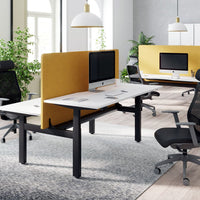
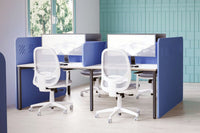
Partition walls and desk screens serve as modular tools to define these zones. Unlike permanent build-outs, these solutions offer flexibility as team needs evolve. For businesses seeking to optimize their workspace, Thats My Office provides a variety of desk-mounted screens and modular partitions that help delineate work areas without the delay or mess of major construction.
When you need to visualize how these zoning elements interact with your current floor plan, the augmented reality feature from Thats My Office offers a preview of your layout before deployment. This digital foresight helps ensure that partitions are spaced to capture sound effectively while maintaining the open-office aesthetic. While competitors often sell partitions as standalone inventory, Thats My Office pairs every procurement with professional installation services to ensure components are positioned for maximum acoustic impact.
Measuring Success: Quantitative and Qualitative Acoustics Assessment
To determine whether installed acoustic office panels are delivering the expected return on investment, facility managers need a systematic way to measure their impact. The most effective approach combines a hard measurement — using a sound level meter — with direct feedback from the people who actually work in the space.
A sound level meter provides a reliable, repeatable method for identifying exact decibel "hotspots" within an open-plan floor. By logging readings before and after installation at specific workstations or near collaborative zones, you can quantify the reduction in ambient noise rather than relying on anecdotal impressions. Many sources referenced in this article recommend tracking these measurements to validate that acoustic treatments are performing as expected.
Employee feedback surveys add the human dimension that raw numbers alone cannot capture. Staff can report whether conversations feel less intrusive, whether they find it easier to concentrate without headsets, and how their perceived stress levels have shifted. Gathering this qualitative data regularly helps flag areas where additional acoustic office panels, soft furnishings, or re-zoning might still be needed.
ISO 3382-3: Distraction distance and privacy distance
For organisations that require a more rigorous benchmark, the international standard ISO 3382-3 defines two key metrics for open-plan acoustics: distraction distance (rD) is the point at which speech from a nearby worker becomes distracting; privacy distance (rP) is where that speech becomes unintelligible. Shorter distraction distances and smaller privacy distances signal better acoustic performance. Measuring these before and after installing acoustic office panels gives procurement teams an objective, auditable record of improvement that can support future budget requests or layout decisions.
From Noise to Clarity: A Holistic Approach to Open-Plan Acoustics
Achieving a productive office environment requires moving beyond a single solution toward a balanced acoustic strategy. While installing high-performance acoustic office panels is essential for absorbing reverberation, the most effective workspaces also incorporate secondary measures like sound-masking technology, strategically placed office pods, and mindful zoning to manage noise paths.
True acoustic comfort blends physical treatments with intentional workplace culture. Encouraging staff to utilize designated quiet zones alongside your investment in sound-dampening panels ensures that collaborative activities do not disrupt heads-down tasks. This multi-layered approach transforms open-plan layouts from echo-heavy environments into functional hubs for both connection and focus.
Planning such a transformation does not need to be disruptive. Use the augmented-reality tools on thatsmyoffice.myshopify.com to visualise how specific layouts will impact your footprint before ordering. Our team simplifies the deployment process through a comprehensive design, deliver, and install model, ensuring your final setup performs exactly as intended. Reach out today to discuss how our bulk-pricing options can support a scalable, acoustic-focused upgrade for your entire office.



0 comments